Lodging at New York State Parks: Which Parks Rent Cabins and Yurts
Choosing a cabin or yurt in New York can be harder than it sounds: lodging types, amenities, seasons, and reservation details differ by park. The useful first step is to confirm which agency operates the campground, then check the individual park’s listing for the lodging it actually offers. Here’s how to narrow the options and avoid booking based on assumptions.
Start by identifying the campground operator
New York has both State Parks and Department of Environmental Conservation campgrounds, and the agency matters when you are searching for lodging. The names can sound similar, but a campground’s operator determines which official park page and reservation information you should use.
New York State Digital Service describes the available range as Tent and RV campsites, cabins, cottages, yurts, and other accommodations. That statewide description does not mean every campground offers every type of stay. A park may have campsites but no cabins, cabins but no yurts, or lodging in only one part of its property. Treat each option as park-specific until the park’s official information confirms it.
The New York State Department of Environmental Conservation says OPRHP operat es all other camping areas, cabins, cottages and yurts. That distinction is a practical starting point, not a substitute for checking a specific listing. If you are unsure which agency runs the campground you have in mind, Who Runs New York State Parks? The Agency Behind Your Campsite can help explain the state-park side, and How a Campground’s Location Tells You Whether DEC Runs It focuses on telling the operators apart.
A common mistake is to search broadly for “New York cabin camping,” see a result for a public campground, and assume the booking rules or lodging details apply to every state facility. Instead, work from the park name and the exact lodging area. The park’s official page should help you verify whether the cabin or yurt is within the campground you plan to visit, whether the listed season suits your dates, and where to find reservation details.
Taconic State Park is one specific place to investigate: according to the New York State Office of Parks, Recreation and Historic Preservation, it has 3 cabin areas. That fact identifies the park as having several cabin areas, but it does not tell you which unit has the amenities or location you want. Check the official Taconic information and the listing for the particular unit before choosing. For a closer look at the park’s camping options, see Copake Falls, Rudd Pond and the Cabins: Camping at Taconic State Park.
If you are still choosing a destination, start with the experience you want rather than assuming a particular lodging type will be available everywhere. Choosing a New York State Park for Your Next Camping Trip can help frame that decision, while the park’s own lodging details should settle what is actually offered at your destination.
Understand what “cabin,” “cottage,” and “yurt” tell you—and what they don’t
A lodging label is a useful filter, but it is not a complete description of your stay. Two accommodations with the same general label can differ in furnishings, utilities, location, sleeping arrangements, and what you need to bring. Read the unit description rather than treating the name as a promise of a standard setup.
A cabin often appeals to visitors who want a roofed place to sleep and a more settled base than a tent site. But the word “cabin” by itself does not establish whether the unit has a kitchen, running water, a bathroom, heat, electricity, or a particular set of furnishings. Those are details to verify for the specific park and unit.
A cottage may sound more comfortable or more fully equipped, but the name alone still does not answer practical questions. Find out what is inside, what is shared elsewhere in the campground, and what you are expected to supply. The distinction is especially useful if you are comparing prices: compare the actual features and trip costs, not just the labels. Cottage or Cabin at a State Park? Comparing Comforts and Prices offers a focused comparison.
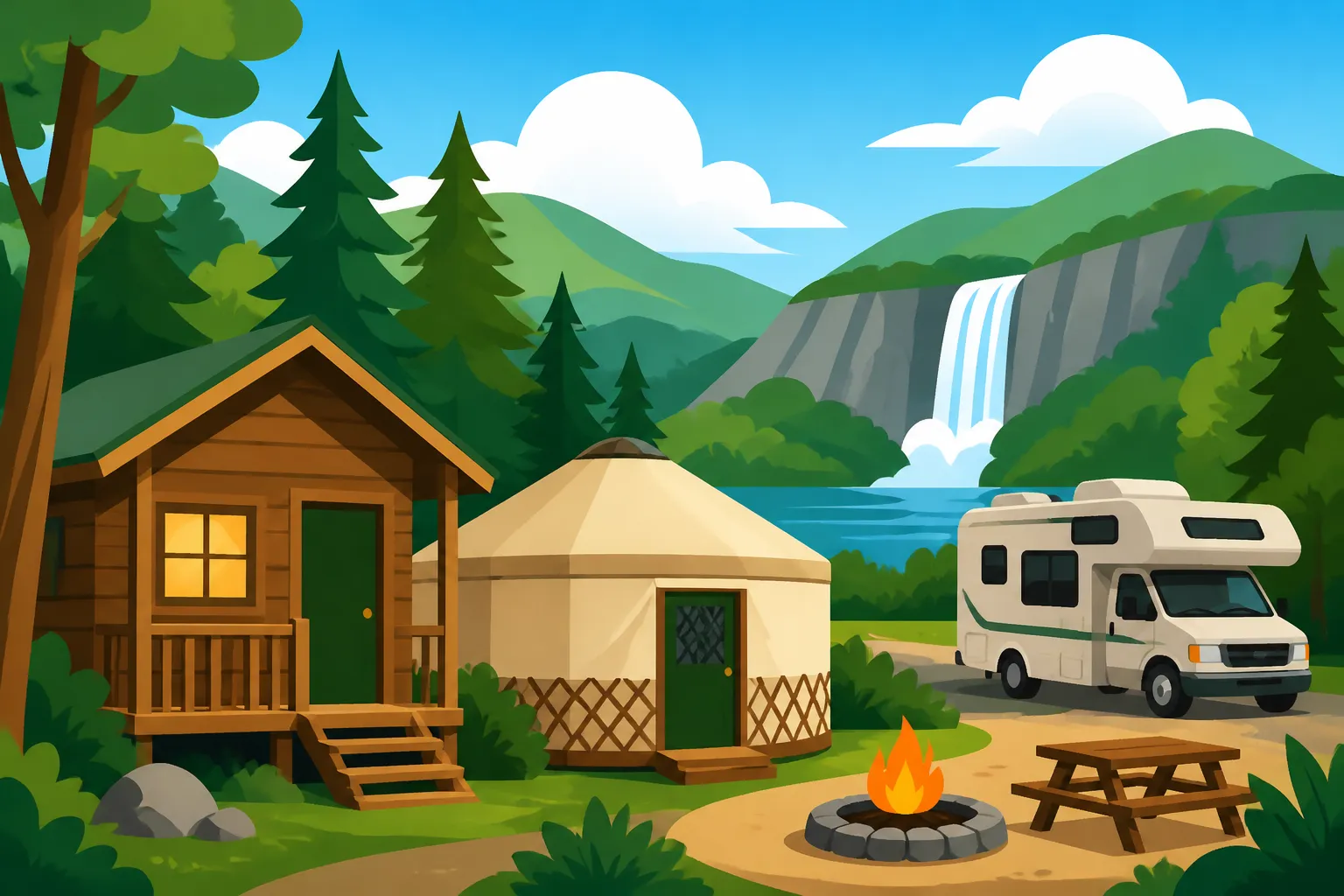
A yurt is another distinct lodging option, but its layout and included features should also be checked against the listing. Do not assume that a yurt has the same facilities as a cabin, or that all yurts are furnished in the same way. Yurt Camping in New York State Parks: What Sets It Apart can help you think through the format, and What Comes Inside a New York State Parks Cabin or Yurt? is useful when you are making a packing plan.
| Lodging type | What the name can help you identify | What to verify before reserving |
|---|---|---|
| Cabin | A roofed lodging option listed as a cabin | Sleeping setup, furnishings, utilities, bathroom access, cooking arrangements, and what to bring |
| Cottage | A separate lodging category that may suit a different comfort preference | The unit’s actual amenities, included equipment, and any items you must supply |
| Yurt | A different style of roofed accommodation from a cabin or cottage | Interior layout, sleeping arrangements, furnishings, utilities, and cooking options |
| Tent or RV campsite | A camping site rather than an enclosed lodging unit | Site type, permitted setup, available services, and what the reservation includes |
The table is a checklist, not a guarantee that every feature is available in each category. The park’s unit description is what matters. If information is unclear, use the park’s official website to find current contact details and ask about the specific unit, rather than making an assumption based on a photo or a general lodging label.
It can also help to compare a cabin or yurt with a campsite before you decide. A roofed unit may reduce the amount of shelter gear you need, but it may not include the features you expect. A campsite gives you a different kind of setup, and the details depend on the site. The right choice turns on the members of your party, how you want to sleep, what you can bring, and how much uncertainty you are willing to manage.
How to find parks with the lodging you want
There is no safe shortcut from “New York State Park” to “this park rents the cabin or yurt I need.” Search for a specific park or campground, then confirm the lodging type in its official information. This approach is slower than relying on a broad search result, but it helps avoid planning around an accommodation that is not available at your intended destination.
Use this process to narrow your options:
- Choose the kind of stay you are looking for. Decide whether you need an enclosed unit, prefer a yurt, or would consider a cottage or campsite if your first choice is unavailable.
- Choose a general area or park experience. Consider travel distance, nearby activities, and whether your group wants a quiet base, a waterfront setting, or access to a particular landscape. For help comparing destinations, see Choosing a New York State Park for Your Next Camping Trip.
- Confirm the operator. Check whether the facility is a State Parks campground or a DEC campground, then use the corresponding official information.
- Open the individual park’s lodging listing. Look for the precise unit type and lodging area, not just a general statement that the park has camping.
- Review the description of the actual unit. Check the sleeping layout, amenities, services, location, and what the listing says to bring.
- Check availability for your dates. A park may offer a type of lodging but have no matching unit available for the dates you want.
- Confirm the current reservation details. Review the booking terms and total cost shown by the official reservation system before completing a reservation.
Search results, third-party summaries, and old trip reports can be useful for generating ideas, but they should not be the last word. Listings change, and a description for one cabin area may not apply to another. If an amenity matters to your group, verify it in the current official listing instead of assuming it is included.
Once you have a shortlist, compare parks using the same questions. Does the lodging have the features you need? Is the sleeping arrangement appropriate for your party? Is the unit open for the dates you are considering? Does the location suit your plans? Are you comfortable with what you will need to bring? Answering those questions side by side makes it easier to choose on practical grounds instead of choosing based on a name or a scenic photo.
Keep the distinction between “the park offers this type of lodging” and “this specific unit is right for my trip” in mind. The first helps you find possibilities; the second takes a closer read of the unit listing. Taconic’s three cabin areas are a good example of why a park-level fact is only a starting point: you still need details about the area and unit that match your trip.
Compare the whole stay, not just the accommodation name
The most useful comparison is not simply cabin versus yurt. It is whether a particular accommodation suits the people, plans, and gear involved in your trip. A modest unit with the features your party needs may be a better fit than a more appealing-sounding option that leaves you scrambling for supplies.
Start with sleeping arrangements. Check how the unit is set up and whether your party can use that arrangement comfortably. Do not infer the number or type of beds from a general photo. If someone in your group needs a particular sleeping surface or more privacy, look for those details in the listing or confirm them before booking.
Next, look at facilities and daily routines. Cooking, washing up, keeping food, using the bathroom, and getting ready for the day can shape the trip more than the accommodation’s name. The listing may explain which amenities are in the unit and which are elsewhere. If it does not, treat the question as unresolved and ask the park through its official contact information.
Location matters, too. A lodging area may be in a different part of a large park from the activities your group cares about. Check the park map and the unit’s location if available. A scenic setting is not automatically the most convenient one for your plans, and a location near one activity may be farther from another. Picking a Cabin Area at a Large Park Before You Book can help you think through that choice.
Consider how much gear you can bring and how you will travel. A roofed unit can change the shelter items you need, but it does not necessarily remove the need to pack bedding, cooking equipment, or other supplies. If you are traveling with children, older relatives, or someone with mobility needs, focus on the particular facilities and route details that affect their comfort. For accessible options, Wheelchair-Accessible Cabins and Cottages at New York State Parks and Accessible Camping at New York State Parks: Restrooms, Showers, Units provide relevant questions to investigate.
Then assess how you will use the park. If you expect to spend most of your time outside the unit, your priorities may be different from those of a group that plans to cook and relax at the accommodation. If the trip includes swimming, hiking, or other activities, check their locations, season details, and access separately. Do not assume that the lodging reservation includes access to every facility or activity you have in mind.
| Planning question | Why it matters | Where to verify |
|---|---|---|
| What is the actual sleeping setup? | Your group needs to know whether the arrangement suits everyone | The individual unit listing |
| What amenities are inside? | The answer affects comfort and packing | The unit description and official park information |
| What facilities are elsewhere? | Shared or separate facilities can change daily routines | The campground or park listing |
| What must you bring? | A roofed unit may still require particular supplies | The booking details and park’s current information |
| Where is the unit located? | The location may affect your route around the park | The official map and lodging-area description |
| What is open during your dates? | Lodging and activities may not share the same schedule | Current park information for each facility |
Price belongs in the comparison, but not in isolation. A rate is only one part of the cost of a stay; consider what the unit includes, how long you plan to stay, and any additional costs shown during booking. Rates and booking details can change, so use the current official listing rather than an old screenshot or someone else’s trip total.
The New York State Office of Parks, Recreation and Historic Preservation lists yurts at $106 per day / weekly rates available as of November 2026. Treat that as a dated reference, not a promise of what a specific yurt will cost for your dates. Confirm the current rate, available stay options, and any other listed charges with the official reservation information. For a fuller explanation of how lodging costs can vary, see Cabin and Yurt Prices at New York State Parks by Party Size.
Plan your search and reservation around availability
Finding a park that offers a cabin or yurt is only part of the job. You also need to find an available unit that fits your dates and the needs of your group. A favorite park may not have the right lodging open when you want to travel, so it helps to keep more than one acceptable option in mind.
Begin with flexible criteria. Separate the things you must have from the things you would merely prefer. For example, a specific lodging type or a particular amenity may be essential, while a certain view or location within the park may be optional. This makes it easier to compare alternatives if your first choice is unavailable.
Search by park and lodging type, then inspect the results carefully. A listing may show multiple units or areas with different descriptions. Confirm you are looking at the correct park, dates, and unit category before comparing availability. Finding an Open Cabin or Yurt on ReserveAmerica covers the search process; use the official reservation system to confirm current availability and complete any booking.
Do not plan around an assumed booking window. The release timing for reservations can depend on the lodging and the system’s current terms. Check the current official information for the dates you want, and use How Many Months Out Do State Parks Cabins Open for Booking? as a prompt for the questions to verify rather than as a substitute for current booking details.
Before you finalize a reservation, review the full listing and confirmation details. Check that the dates, lodging type, park, and selected unit are correct. Read the terms that apply to payment, changes, cancellations, arrival, and departure. These details can affect your plans if something changes, and they should be checked with the official reservation system rather than inferred from a different park or an older reservation.
Keep a copy of the confirmation and the unit details available for the trip. If the description is important to a group member’s needs, save or note the relevant information so the party can plan supplies and travel accordingly. If any part of the description is ambiguous, resolve that question before the trip rather than waiting until arrival.
A useful comparison sheet can be simple:
- Park and campground name
- Operator
- Lodging type and specific area
- Dates available
- Sleeping arrangement
- Amenities confirmed
- Items to bring
- Location within the park
- Current cost shown during booking
- Terms or details your party needs to remember
Keep the list factual. Mark an amenity as confirmed only when you have seen it in the current listing or received confirmation from the park. That small distinction helps prevent a hopeful assumption from turning into a packing problem.
Get ready for the stay and confirm details before departure
Once you have reserved a unit, plan around what the listing actually says—not what you expect a cabin, cottage, or yurt to include. A roof and a bed may solve some camping challenges, but they do not automatically settle questions about linens, cooking, storage, utilities, or bathroom access. Use the unit description to build a packing list, and check with the park if a detail is missing.
Make separate lists for confirmed items and unanswered questions. Confirmed details can guide what you pack; unanswered ones should be checked through the official park information. If you cannot verify whether something is supplied, decide whether bringing it is manageable rather than assuming it will be there.
For food and cooking, establish what the unit allows and what equipment is provided. Do not assume a kitchen, stove, refrigerator, or cookware is part of the stay unless the listing says so. Check the park’s current information for any food-storage or cooking instructions that apply to the specific area. If you plan to cook outdoors, check the current fire information before you leave and again when you arrive. Rules and restrictions can change, so use the relevant official park or agency information instead of relying on a previous visit or an old online discussion.
Plan how you will get around the park. Look at the map and consider where you will park, how far the lodging area is from the activities you want to reach, and whether your group has mobility or transportation needs. If cell reception may be uncertain on your route or at your destination, save the map and reservation details in a form you can access offline. Will You Have Cell Service at a State Park? Download Maps First can help you prepare for that possibility.
Check the park’s season information for both the lodging and the activities on your itinerary. A cabin or yurt being available does not establish that every nearby facility is operating on the same schedule. Verify what matters for your trip directly with current park information. If you are considering a colder-weather stay, Winterized Cabins at New York State Parks: Where to Find One can help you identify the questions to ask about a particular unit and its availability.
Just before leaving, recheck the reservation confirmation, directions, arrival details, and any current notices that could affect your plans. If there is a question you still cannot answer, use the official website to find current contact information. Avoid relying on a general description when the issue is unit-specific.
It is also worth setting expectations with everyone in your party. Explain what is confirmed, what needs to be brought, and which amenities or activities have not been verified. That way, people can make their own plans around the actual setup rather than assuming that a cabin or yurt provides the same experience as a different park’s accommodation.
A little preparation is especially useful when the group has different comfort needs. One person may be focused on sleeping arrangements, another on cooking, and someone else on access to facilities. Review the listing together and address those priorities before booking where possible. If the details do not fit, compare another unit or park rather than hoping that an unclear feature will work out.
Frequently Asked Questions
Which New York State Parks rent cabins or yurts?
The lodging available depends on the individual park and its campground. Confirm the cabin or yurt offering in the current official park listing before choosing dates. Taconic State Park is one park with cabins, and its information describes three cabin areas.
Does every cabin or yurt have the same amenities?
No. A lodging label does not establish the sleeping arrangement, furnishings, utilities, or facilities. Check the specific unit’s description and confirm any feature your party needs.
Are State Parks and DEC campgrounds operated by the same agency?
No. The state’s camping options span both State Parks and DEC facilities. Confirm the operator for the campground you are considering so you use the right official information and reservation details.
What should I check before booking?
Verify the park, operator, lodging type, unit location, dates, sleeping setup, amenities, items to bring, current cost, and reservation terms. If a detail is unclear, confirm it with the park before relying on it.
Sources
- New York State Department of Environmental Conservation (checked November 22, 2026)
- New York State Digital Service — Find a Campground | The State of New York (checked November 22, 2026)
- New York State Office of Parks, Recreation and Historic Preservation — Golden Hill State Park – New York State Parks & Historic Sites (checked November 23, 2026)
Disclaimer
This article is for general informational purposes only and does not constitute professional advice. Laws, prices and regulations vary by location and change over time. Consult a qualified professional for guidance on your specific situation. New York Camping & RV is not a government agency and is not affiliated with any government agency.